Office Sauce Politics: What Your Coworker's Condiment Stash Says About Them
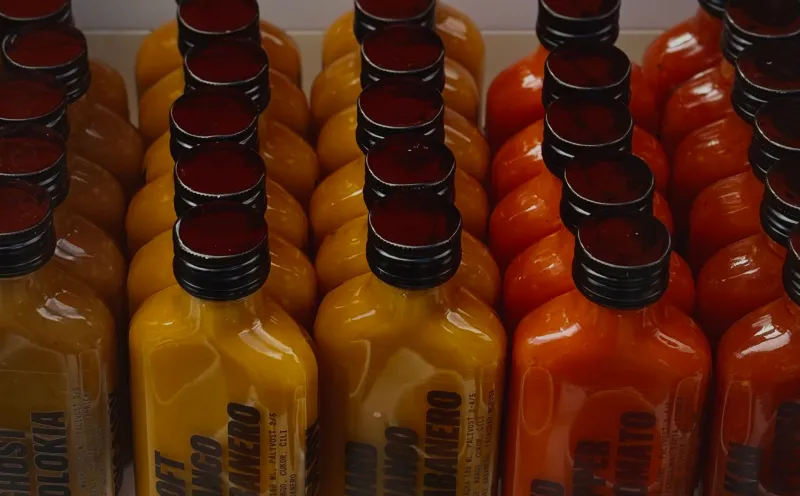
You've seen it happen. Someone opens the break room fridge, scans the condiment shelf, and pauses — not because they're hungry, but because something is off. Their bottle is gone. Or moved. Or, worst of all, clearly used by someone else and put back half-empty without so much as a sticky note apology.
Welcome to office hot sauce politics. It's pettier than you'd expect, more revealing than it has any right to be, and absolutely universal across American workplaces. Whether you're in a downtown Chicago high-rise or a three-person startup in Austin, the condiment dynamics in your shared kitchen are basically a field study in human behavior.
The Desk Drawer Hoarder
Let's start with the most recognizable archetype: the person who doesn't trust the communal fridge at all. They've got a collection going in their bottom desk drawer — a few packets of Cholula snagged from the burrito place down the street, a miniature Tabasco they've been nursing since a Delta flight in 2022, maybe a travel-sized bottle of something they ordered online that technically doesn't need refrigeration.
This person has been burned before. Maybe literally, maybe metaphorically. They learned early that shared resources in an office setting are a liability, and they've responded by going fully self-sufficient. Respect the hustle. Also, they are almost certainly the most prepared person in the building for any kind of low-stakes emergency.
What their stash says about them: high autonomy, low trust in systems, probably very good at their actual job.
The Communal Bottle Contributor
On the opposite end of the spectrum is the person who brings in a bottle for everyone. They show up one Monday with a 12-ounce bottle of something genuinely good — maybe a small-batch Louisiana-style with a hand-stamped label, maybe a smoky chipotle situation they picked up at a farmers market — and they set it on the communal shelf like a gift to the people.
This move is both generous and deeply strategic. Because now everyone knows they have taste. The bottle becomes a conversation starter. People ask about it. They get to explain it. Suddenly they're the person in the office who knows about hot sauce, and that's a whole identity.
Watch out though: if someone starts using that bottle without acknowledging the original contributor, there will be feelings. Unspoken, professional feelings that linger for months.
The Sriracha Loyalist
Every office has one. They've been using the rooster bottle since college, they put it on everything from scrambled eggs to pad thai to, somehow, a Caesar salad, and they are not interested in your artisanal alternatives. This isn't stubbornness — it's brand identity. Sriracha is part of their self-concept at this point.
The Sriracha loyalist is usually a reliable, consistent worker. They know what they like, they're not chasing trends, and they will absolutely notice if someone uses up the last of their bottle and replaces it with a generic knockoff. That is a trust violation. That is a thing that happened.
The Person Who Brought In Something Nobody Can Handle
Ah. Yes. This one.
At some point, someone in your office brought in a bottle with a skull on it, or a sauce named after a natural disaster, or something they described as "really not that hot, honestly" while their eyes said something completely different. They set it out with the casual confidence of someone who has fully acclimated to pain.
The office then divided into two camps: people who tried it to prove something, and people who didn't need to prove anything. Both camps quietly respect the other. The person who brought it in watches all of this unfold with quiet satisfaction, because this was always the plan.
What their condiment choice reveals: they have a high tolerance — for capsaicin and probably for workplace conflict. They're the one who speaks up in meetings when nobody else will.
The Break Room Fridge as Social Battleground
Here's where things get genuinely interesting from a cultural standpoint. The shared condiment shelf operates on an honor system that nobody explicitly agreed to, and the rules are completely made up but also completely real.
Unwritten office hot sauce laws, as observed across American workplaces:
- Don't use more than a third of someone else's bottle without asking. This is a line. Everyone knows it.
- If you finish it, you either replace it or confess. Leaving an empty bottle in the fridge is a crime.
- Labeling your bottle is your right. Respecting that label is non-negotiable.
- Bringing in something new does not give you authority over the existing lineup. The shelf has an ecosystem. Don't disrupt it.
Violations of these rules create the kind of low-grade office tension that never quite makes it to HR but absolutely gets discussed at happy hour.
What It All Actually Means
Hot sauce is one of those rare foods that functions as pure self-expression. There's no social obligation to it — nobody's eating it to be polite or because it was served at a work lunch. People seek it out, carry it with them, and defend it because it genuinely reflects something about who they are.
In a workplace, where so much of your personality gets filtered through professionalism and meeting etiquette, the condiment shelf is one of the few places people let their guard down. The bottle someone reaches for says something about their appetite for risk, their loyalty to the familiar, their desire to stand out or fit in.
So next time you're in the break room, take a second look at what's on that shelf. You might learn more about your team dynamics than you would from any quarterly all-hands.
And if your bottle's gone missing? You already know who did it. You've always known.