Follow the Pepper: A Deep Dive Into Where Your Favorite Hot Sauce Really Comes From
Pick up any bottle of hot sauce and read the label. You'll probably find a list of ingredients, a Scoville estimate if you're lucky, and maybe some copy about 'bold flavor' or 'authentic heat.' What you almost certainly won't find is the full story — the one that starts not in a commercial kitchen or a bottling facility, but in a specific patch of soil somewhere in the Americas, centuries before the sauce existed.
Every pepper has a lineage. And understanding that lineage doesn't just make you more interesting at dinner parties — it genuinely changes the way you experience the sauces you love.
Capsicum's American Roots
All hot peppers belong to the genus Capsicum, and their story begins in the Americas. Archaeological evidence places the domestication of chili peppers in Mexico and Central America somewhere around 6,000 years ago, with wild varieties growing across a much broader range that extended through South America. When Spanish and Portuguese explorers arrived in the late 15th and early 16th centuries, they encountered peppers being cultivated by Indigenous peoples across the continent and brought them back to Europe — and from there, through trade routes, to Africa, India, and Southeast Asia.
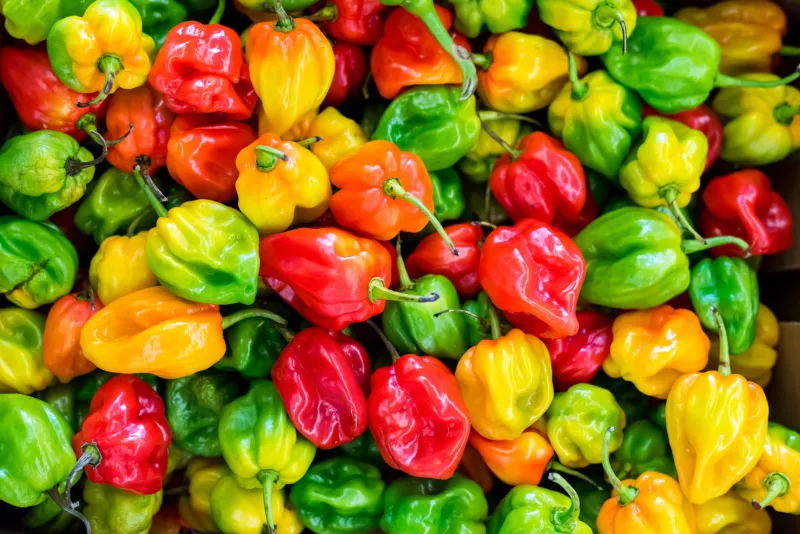
This is why the heat genealogy of your favorite bottle gets complicated fast. The habanero pepper, which most Americans associate with Caribbean and Yucatán cuisine, likely originated in the Amazon basin. The ghost pepper, or Bhut jolokia, which feels definitively South Asian, is now understood to be a natural hybrid that developed in northeastern India from peppers that arrived through Portuguese trade routes. The Carolina Reaper, which holds the Guinness World Record for hottest pepper, was bred in South Carolina in the early 2000s — but its parents include a Pakistani Naga pepper and a Red Habanero.
Nothing is purely from where it seems to be from. That's not a complication — it's the whole fascinating story.
Terroir Is Real, and It Matters
Wine drinkers have long understood the concept of terroir — the idea that the specific soil, climate, and geography where a grape is grown fundamentally shapes its flavor. The same principle applies to peppers, and it's more significant than most hot sauce consumers realize.
Take the habanero. Grown in the Yucatán Peninsula of Mexico under the specific conditions of that region — the limestone-rich soil, the humidity, the particular intensity of light — it develops a flavor profile that's distinctly floral and fruity, with a clean, fast-hitting heat. Grow the same habanero cultivar in a greenhouse in Ohio, and you'll get something that looks nearly identical but tastes subtly different: slightly less complex, potentially hotter or milder depending on conditions, with some of that signature fruitiness muted.
This is why the Yucatán habanero has Protected Designation of Origin status in Mexico, the same kind of geographic protection that covers Champagne in France. The pepper grown there is recognized as categorically different from the same variety grown elsewhere — not better or worse, necessarily, but genuinely distinct.
For hot sauce consumers, this means that when a brand specifies where their peppers come from — 'Red Savina habaneros from a single farm in Belize' or 'Fresno chiles sourced from California's Central Valley' — that's not just marketing language. It's a meaningful signal about what's in the bottle.
Reading a Label Like a Flavor Archaeologist
Most commercial hot sauces don't specify pepper origin on the label, but there are ways to start building a picture of what you're tasting and where it comes from.
Start with the pepper variety itself. If a sauce lists 'habanero' without further specification, it's almost certainly using peppers grown in Mexico or Central America, where the majority of commercial habanero cultivation happens. If it says 'ghost pepper' or 'Bhut jolokia,' the peppers likely came from northeastern India or Bangladesh, where the variety originated, though US-grown versions are becoming more common. 'Serrano' almost always points to Mexico, where roughly 90% of commercial serrano production occurs.
Next, look at the sauce's stated heat level relative to what you'd expect from the listed pepper. A habanero sauce that's noticeably milder than typical might be using peppers from a cooler growing region, where capsaicin production is naturally lower. One that hits harder than expected might be using a particularly hot cultivar or peppers grown under stress conditions — drought, for instance, tends to increase capsaicin production as a plant defense mechanism.
Finally, pay attention to flavor notes beyond heat. Smoky, earthy undertones in a chipotle sauce often reflect the specific mesquite-smoking traditions of northern Mexico. A citrusy brightness in a Thai-style sauce might come from prik kee nu peppers that share genetic lineage with the original peppers that arrived in Southeast Asia via Portuguese traders in the 1500s.
The Farmers Behind the Flavor
Behind every distinctive pepper is someone who grew it, and increasingly, the best small-batch hot sauce producers are making those relationships visible. Brands that work directly with specific farms — and say so — are giving you traceability that most food products don't offer.
This matters for flavor, but it also matters for the broader agricultural ecosystem. Many heritage pepper varieties exist today only because small-scale farmers in specific regions maintained them through generations of cultivation, often in the face of economic pressure to switch to higher-yield commercial varieties. When a hot sauce brand sources from those farmers and pays a price that makes that cultivation viable, they're participating in the preservation of genuine biodiversity.
Some of the most interesting peppers in the hot sauce world right now — varieties like the Aji Amarillo from Peru, the Datil from St. Augustine, Florida, and the Pimento de Padrón from Galicia, Spain — exist in their current form because of this kind of sustained, place-specific cultivation. Each one carries centuries of agricultural history in its flavor profile.
Tasting With Context
Next time you open a bottle, try this: before you pour, look up where the primary pepper comes from. Read two paragraphs about that region — its climate, its agricultural traditions, the communities that have grown this pepper for generations. Then taste the sauce.
It sounds like a lot of homework for a condiment. But what tends to happen is that the sauce suddenly tastes like more than just heat and acidity. You start picking up the specific fruitiness of a Yucatán habanero, or the slow-building warmth of a pepper that developed over centuries of cultivation in volcanic soil. You taste the history in it.
That's what following the pepper actually gets you: a deeper, richer experience of something you were already enjoying. And honestly, that's a pretty good return on a little curiosity.