Who Gets the Hot Ones? The Surprisingly Real Problem of Leaving Behind a Hot Sauce Collection
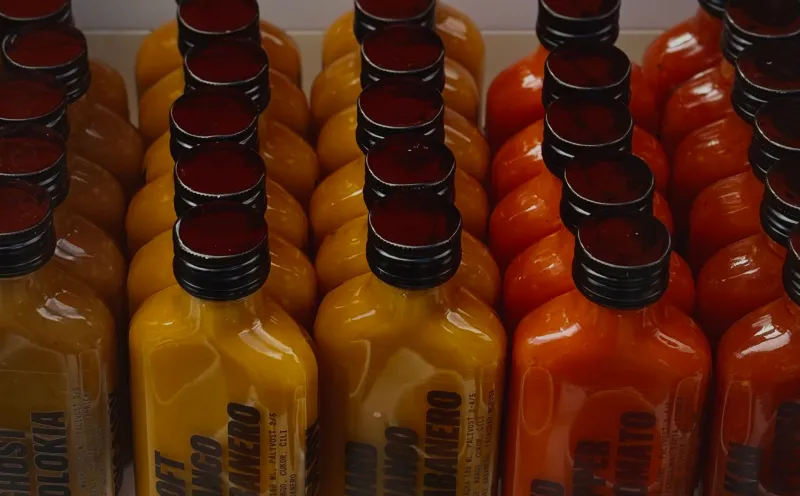
Somewhere in a garage in Tucson, Arizona, there are 340 bottles of hot sauce. Some are vintage. Some are limited-run collaborations. A few are signed by the makers. Most of them have never been opened. And their owner, a retired electrician named Dennis who has been collecting since the late '90s, has started thinking about something that most collectors try not to: what happens to all of this when he's gone?
"My kids think it's a hobby," Dennis says. "They don't understand that some of these bottles are worth real money. They'd probably just dump them."
It sounds like a niche problem. But spend any time in the serious collector community and you'll find that the question of hot sauce inheritance—who gets the collection, what it's actually worth, and whether anyone in your life even cares—is something a lot of people are quietly wrestling with.
The Collection Nobody Thinks to Catalog
Hot sauce collectors are, by nature, obsessive documenters. They track heat levels, fermentation dates, regional provenance, limited-edition batch numbers. They know which bottles came from which small-batch producer in which Louisiana parish. They can tell you the exact year a beloved brand changed its pepper blend.
But almost none of them have written any of that down in a way that would survive them.
That's the first problem. A collection without documentation is just a shelf full of bottles to anyone who didn't build it. The knowledge lives in the collector's head—the story behind the sauce, why a particular bottle matters, what it would take to replace it. When that person is gone, so is the context.
Linda, a collector based outside of Nashville with over 200 bottles and a spreadsheet she describes as "almost embarrassingly detailed," started formally cataloging her collection after her mother passed away and left behind a house full of things nobody could identify or value properly.
"I watched my family argue over stuff that turned out to be worth nothing and throw away stuff that turned out to be worth something," she says. "I didn't want that to happen to my sauces."
Her spreadsheet now includes purchase date, source, estimated current market value, and a notes column where she writes things like do not open—this is the last bottle from the original Charleston run and this one is for my daughter if she ever develops taste.
What Is a Hot Sauce Collection Actually Worth?
This is where things get genuinely complicated. Unlike wine or whiskey, hot sauce doesn't have a formalized secondary market with established auction records and appraiser certifications. Value is largely community-driven—what collectors are willing to pay each other on forums, at swap meets, or through private sales.
A bottle that retailed for $14 in 2015 from a producer who has since closed up shop might fetch $80 or more from the right buyer. Or it might sit on a Facebook marketplace listing for six months with zero interest. It depends entirely on who's looking and what the community currently cares about.
For estate purposes, that's a nightmare. Most estate attorneys and appraisers have no framework for valuing a hot sauce collection. You're essentially asking someone to assess the worth of a highly niche, perishable, taste-dependent product with no standardized market.
"I actually talked to an estate attorney about it," says Marcus, a collector in Portland who specializes in Pacific Northwest small-batch producers. "She was very polite but I could tell she had absolutely no idea what I was talking about. She kept calling them 'condiments.'"
Marcus has since connected with a few other serious collectors who have informally agreed to appraise each other's collections if needed. It's not exactly a legal solution, but it's something.
The Heir Problem
Even when a collection is well-documented and reasonably valued, there's still the question of who actually wants it.
Hot sauce enthusiasm is not automatically hereditary. Plenty of passionate collectors have kids or partners who find the whole thing mildly baffling. The idea of inheriting several hundred bottles of artisanal pepper mash—some of which you're not supposed to open, some of which require refrigeration, some of which are apparently "too important to use"—is not necessarily a gift. It might feel more like homework.
Dennis in Tucson has three adult children. One is mildly interested in spicy food. One is not. One is allergic to capsaicin, which Dennis describes as "a personal tragedy I've never fully processed."
He's started thinking about whether a portion of his collection should go to the broader collector community instead—donated to a hot sauce museum (yes, those exist), offered to fellow collectors at below-market rates, or sold with the proceeds going to his grandkids.
"The bottles deserve to go somewhere they'll be understood," he says. "I don't want them to end up at a garage sale for fifty cents each."
Passing Down the Knowledge, Not Just the Bottles
Some collectors are taking a different approach entirely. Instead of worrying about what happens to the physical collection, they're focused on passing down the knowledge and enthusiasm that built it.
Linda has started hosting what she calls "sauce school" dinners with her daughter—structured tasting sessions where she explains the history behind specific bottles, talks through what to look for in a quality fermented sauce, and walks through why certain regional styles developed the way they did.
"She's starting to get it," Linda says. "She asked me last month where to find a good Louisiana-style sauce that wasn't Tabasco. That felt like a win."
Marcus has started writing detailed tasting notes and pairing suggestions for his most significant bottles, not just for his own records but as a kind of guide for whoever eventually handles his collection. Part reference document, part love letter to the sauces themselves.
"If someone opens one of these bottles after I'm gone and they read my notes, they'll at least know what they're tasting," he says. "They'll understand why it mattered."
The Bigger Question Nobody Wants to Ask
There's something else lurking underneath all of this, and it's not really about bottles or appraisals or estate planning at all.
Hot sauce collecting, at its most serious, is about the pursuit of something—flavor, heat, craft, community, the thrill of finding a sauce that nobody else has heard of yet. It's about building something over time. And like any collection, it eventually forces you to confront the fact that you are finite and your collection, in some form, is not.
What you leave behind says something about what you valued. For collectors, the shelf is a kind of autobiography.
Dennis puts it simply: "I want someone to look at those bottles and understand that a person cared deeply about something. That they paid attention. That they knew the difference."
That's not really an estate planning problem. That's a human one. And hot sauce, of all things, has a way of making it feel surprisingly urgent.
Got a collection of your own and wondering where to start documenting it? Browse our resources at samsspicysauces.com—because the heat you've chased deserves to be remembered.