Why the Best Hot Sauce You've Ever Had Is Still Stuck Inside a Restaurant Kitchen
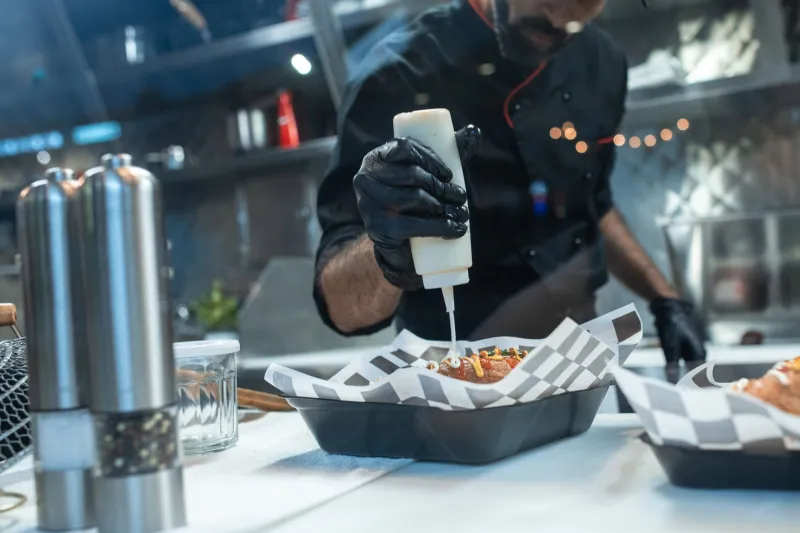
There's a specific kind of food heartbreak that happens when you ask a restaurant if you can buy their hot sauce to take home, and the answer is some version of 'we've thought about it.' It's a gentle letdown, usually delivered with genuine regret by someone who clearly gets it. Because they know the sauce is good. You know the sauce is good. And yet, the bottle never materializes on a shelf anywhere.
This isn't an accident. It's the product of a collision between culinary passion and regulatory reality that trips up even the most motivated restaurant owners. The path from 'incredible house-made condiment' to 'product you can buy at a grocery store' is paved with FDA requirements, co-packer negotiations, label compliance headaches, and economics that often just don't work out.
The Recipe Is the Easy Part
Most restaurant owners who've tried to commercialize a sauce will tell you the same thing: developing the recipe was never the problem. The problem started the moment they tried to scale it.
In a restaurant kitchen, a hot sauce gets made in batches that might serve a few hundred meals a week. The chef adjusts by feel — a little more vinegar this week because the peppers are sweeter than usual, a slightly longer cook time because the humidity is different. That flexibility is part of what makes it great. It's a living recipe.
Manufacturing a shelf-stable product for retail is the opposite of that. Every batch has to be identical. Every ingredient has to come from a consistent, documented source. The process has to be repeatable by people who weren't there when the original recipe was developed, in a facility that probably looks nothing like the restaurant kitchen where it was born.
'You lose something in that translation almost every time,' says one small-batch producer who spent two years trying to bring a restaurant client's signature sauce to market. 'Not because the recipe changes dramatically, but because the conditions that made it special — the fresh peppers from a specific farm, the way the chef tasted and adjusted constantly — those don't survive industrialization.'
FDA Compliance Isn't Optional
For any hot sauce hitting retail shelves in the US, FDA compliance isn't a formality — it's a significant undertaking. The agency requires that acidified foods, which most vinegar-based hot sauces qualify as, undergo a process called a Scheduled Process Review. This involves a certified food scientist analyzing the recipe to verify that the pH and water activity levels are sufficient to prevent pathogen growth, particularly botulism.
That review costs money. Getting the paperwork filed correctly costs money. And if the recipe needs adjustment to hit the required pH threshold — which it sometimes does — that can change the flavor profile in ways that make the whole exercise feel pointless.
Beyond that, there's labeling. FDA-compliant labels require specific formatting, allergen declarations, and nutritional information calculated from a certified lab analysis. A restaurant's hand-written ingredient list doesn't cut it. Neither does a logo a friend designed in Canva, at least not without meeting specific size and placement requirements.
'I didn't realize how much of the process was just paperwork,' says the owner of a Texas barbecue joint whose jalapeño-peach sauce has developed something of a local cult following. 'I thought I'd be spending my time perfecting the sauce. Instead I was on the phone with a food lawyer for six months.'
The Co-Packer Problem
Most small producers can't manufacture their own product — they don't have certified commercial kitchens, the right equipment, or the volume to justify the investment. So they work with co-packers: third-party facilities that manufacture the product on their behalf.
Finding a co-packer willing to work with small batches is harder than it sounds. Many facilities have minimum run requirements — sometimes 5,000 units or more — that make no sense for a restaurant owner testing the market. Those that do work with small batches tend to charge a premium for it, and the economics can get ugly fast.
Run the numbers: a small-batch co-packer might charge $3–5 per unit for production. Add glass bottles, caps, labels, and shipping, and you're at $6–8 per bottle before you've made a cent. Wholesale to a retailer typically means selling at 50% of retail price. To make the math work at a $12 retail price point, margins are razor-thin — and that's before you account for the months of development costs, lab fees, and legal review that got you there.
'A lot of restaurant owners look at those numbers and decide it's not worth it,' says one food industry consultant who's worked with dozens of small-batch producers. 'And honestly? For a lot of them, it isn't. The sauce makes them money as a restaurant asset. Turning it into a retail product is basically starting a second business.'
The Ones That Make It
Some restaurant sauces do cross over successfully. The ones that tend to make it share a few common traits: a dedicated owner willing to treat the retail product as a separate business, a recipe that survives scaling without losing its identity, and often, some form of outside investment or partnership that absorbs the upfront costs.
Farmer's market appearances and direct-to-consumer sales through a website are common first steps — they sidestep the wholesale margin problem and let a brand build an audience before approaching retailers. A few have found success through platforms that specialize in small-batch food products, where the audience is already primed to pay premium prices for something with a real story behind it.
But for every sauce that finds its way to a shelf, there are dozens more that remain exactly where they started: in a restaurant kitchen, made in small batches, available only to people lucky enough to be sitting at the right table.
Maybe that's not entirely a tragedy. Some things are better for being rare.