What You're Actually Paying For: The Real Science Behind Premium Hot Sauce

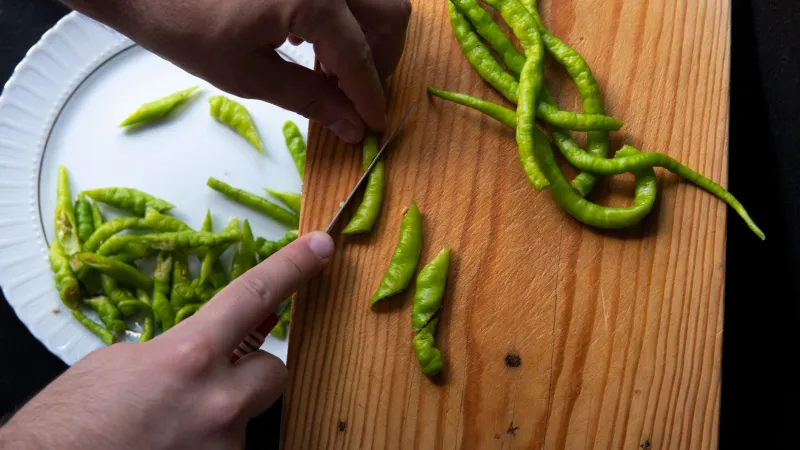
Photo by Photo by Phil Hearing on Unsplash on Unsplash
Let's be honest. You've stood in the hot sauce aisle, picked up a small-batch bottle with a hand-drawn label, checked the price tag, and immediately put it back. Eighteen dollars for hot sauce? Come on.
But then you tried it at a friend's place, or at a food festival, or maybe you just caved one afternoon and bought it anyway — and something clicked. It wasn't just heat. It was flavor. Layered, complex, almost wine-like in the way it unfolded across your palate. Suddenly the $2.99 bottle you'd been squirting on everything for years tasted flat by comparison.
So what's actually going on? Is the premium price tag justified, or is it just clever branding and a rustic font? The answer, it turns out, is firmly rooted in science and craft — and once you understand it, you'll never look at a bottle of hot sauce the same way again.
It Starts With the Pepper (And That Part Really Matters)
Mass-produced hot sauces are built around consistency and shelf life. That means using peppers that are easy to grow at scale, harvested efficiently, and processed quickly. The result is a product that tastes roughly the same every single time — which sounds like a good thing, until you realize that consistency often comes at the cost of depth.
Artisanal producers tend to source their peppers very differently. Many work directly with small farms, selecting specific cultivars chosen for flavor rather than just Scoville count. A Fresno pepper grown in California's Central Valley under specific soil and climate conditions will taste meaningfully different from the same variety grown elsewhere. Terroir — the concept wine drinkers know well — applies to peppers too.
Beyond variety and origin, ripeness at harvest is a massive variable. Peppers allowed to fully ripen on the vine develop more sugar, more complex aromatic compounds, and a richer overall flavor profile. Industrial operations often harvest early to extend shelf life and simplify logistics. Small-batch makers can afford to wait, and that patience shows up directly in the bottle.
Fermentation: The Slow Lane Is the Right Lane
This is where things get really interesting from a food science perspective. Many premium hot sauces rely on lacto-fermentation — a process where naturally occurring bacteria convert the sugars in peppers into lactic acid. The result is a sauce with tanginess, complexity, and a depth of flavor that no vinegar shortcut can replicate.
The catch? Fermentation takes time. A quality fermented hot sauce might spend anywhere from two weeks to several months in a controlled environment before it ever sees a blending tank. During that window, hundreds of flavor compounds are developing, breaking down, and recombining in ways that are genuinely difficult to shortcut.
Budget brands skip this process almost entirely. They rely on distilled vinegar for acidity, which gives you that sharp, one-note tang you recognize from the classics. Vinegar isn't bad — it's a legitimate preservation tool — but it doesn't build flavor the way fermentation does. It's the difference between a quick pan sauce and a stock that's been simmering for six hours. Both are acidic. Only one tastes like something.
Aging and Why It Changes Everything
Some of the most respected hot sauces in the country spend time aging after fermentation — in barrels, in tanks, or in carefully controlled cold storage. This isn't marketing theater. Aging allows volatile compounds to mellow, flavors to integrate, and the overall profile of the sauce to round out in ways that can't be rushed.
Think of it like the difference between a young bourbon and a 12-year single barrel. The young spirit has heat and character, but it's rough around the edges. The aged version has had time to interact with its environment, lose some harsh notes, and develop a smoothness that coexists with the intensity. Hot sauce works similarly. An aged small-batch habanero sauce will have heat, but it'll also have fruit, smoke, earthiness — a whole conversation happening on your tongue instead of just a single loud shout.
What's Actually in the Bottle Matters More Than You Think
Flip a budget hot sauce bottle around and read the ingredients. You'll usually find a pretty short list: peppers, vinegar, salt, maybe some garlic powder or xanthan gum. That's fine. It does the job. But it's not building toward anything complex.
Now look at a premium artisanal label. You might see roasted peppers, fresh garlic, mango, tamarind, smoked sea salt, or any number of supporting ingredients that add dimension without overwhelming the core heat. These additions aren't just gimmicks — they're flavor scaffolding. They give the capsaicin something to work with, something to play against, so the heat feels integrated rather than isolated.
And speaking of capsaicin — the compound responsible for all that glorious burn — its behavior changes depending on what surrounds it. Fat-soluble by nature, capsaicin's heat sensation is amplified or softened depending on the presence of oils, sugars, and acids in the sauce. A well-formulated premium sauce actually engineers the heat experience, not just the heat level.
Small Batches Mean Real Quality Control
Here's a practical reality that often gets overlooked: when you're making 50,000 bottles at a time, individual quality control is nearly impossible. When you're making 500, you can taste every batch, adjust seasoning by hand, and catch problems before they end up in someone's pantry.
Small-batch producers are also far more likely to pull a batch that doesn't meet their standards rather than ship it anyway. That kind of flexibility just doesn't exist at industrial scale, where production schedules and retailer commitments create enormous pressure to ship product regardless of whether it's quite right.
So Is It Worth It?
Here's where we land: yes, the price difference is real. And yes, a significant portion of that price reflects genuine differences in ingredients, process, time, and care. You're not just paying for a cool label or a spicy origin story. You're paying for fermentation time, ripeness decisions made weeks before harvest, flavor compounds that took months to develop, and a producer who actually tasted what they put in the bottle.
That doesn't mean budget sauces don't have a place — they absolutely do. But when you're looking to add real depth to a dish, to experience heat as part of a larger flavor story rather than just a one-dimensional punch, the premium bottle earns its spot on the shelf.
At Sam's Spicy Sauces, we've tasted a lot of both. The ones that stick with us — the ones we reach for again and again — are always the ones where someone clearly slowed down and let the process do its work. That's the heat worth chasing.