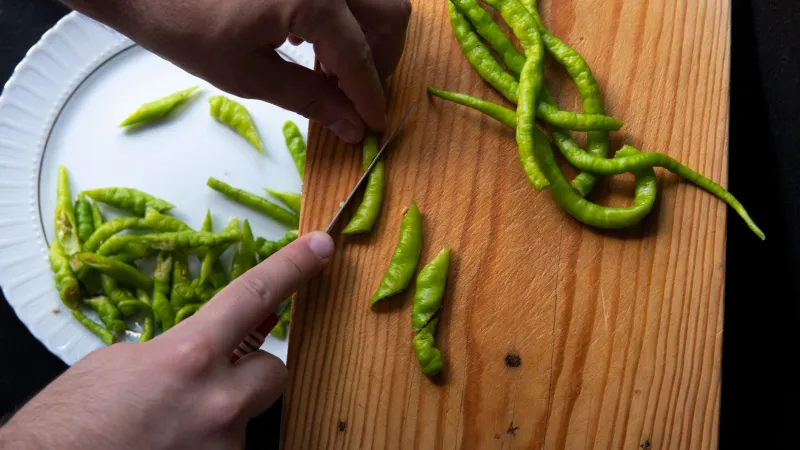
Timing Is Everything: The Surprising Science of When a Pepper Gets Picked
The Clock Inside a Pepper
There's a moment in a pepper's life — a specific window, sometimes just a few days wide — when everything clicks. The sugars have developed, the cell walls have softened just enough, and the capsaicinoids have hit their peak concentration. Miss that window by a week in either direction, and you've got a fundamentally different ingredient on your hands.
Most people think of peppers as a static thing. Hot or not hot. Red or green. But anyone who's ever bitten into a fresh jalapeño from a backyard garden versus a grocery store one knows that's not the whole story. The difference isn't just freshness — it's maturity. And maturity is almost entirely about timing.
For craft hot sauce makers, harvest timing isn't an afterthought. It's arguably the single most important variable in the entire production process.
What's Actually Happening Inside the Pepper as It Ripens
Peppers go through a dramatic biochemical transformation as they mature on the plant. Understanding that process explains a lot about why the same variety can taste so wildly different from one bottle to the next.
Capsaicin development: Capsaicin — the compound responsible for heat — is produced in the placental tissue of the pepper (that white pithy membrane where the seeds attach). Interestingly, capsaicin levels don't simply increase the longer a pepper stays on the plant. Production peaks somewhere in the mid-to-late green stage for many varieties, then can actually level off or even decline slightly as full color ripeness sets in. This is partly why some green jalapeños can register hotter on the Scoville scale than their fully red counterparts, even though the red ones taste more complex.
Sugar accumulation: As peppers ripen and transition from green to their final color — red, orange, yellow, chocolate brown — chlorophyll breaks down and carotenoids take over. Simultaneously, starches convert to simple sugars. A fully ripe red habanero has measurably more sugar than a green one harvested early, which is why ripe peppers often taste fruity and sweet underneath the burn. That sweetness isn't an illusion. It's chemistry.
Acidity shifts: The pH of pepper flesh changes through the ripening process. Early-harvest peppers tend to be crisper and more sharply acidic. Fully ripe peppers develop a rounder, mellower acidity that reads differently on the palate — less bright, more layered. This matters enormously when you're building a sauce where acid balance is part of the flavor architecture.
Water content and concentration: Riper peppers have lost more moisture through the plant's natural respiration process, which means the flavor compounds are more concentrated. A dehydrated, fully ripe pepper isn't just sweeter — it's more intensely everything.
Green vs. Ripe: Two Completely Different Flavor Stories
Let's get specific. Take the cayenne pepper — one of the most common peppers in American hot sauce production. A green cayenne is grassy, sharp, and aggressively hot with a clean, almost vegetal bite. A fully ripe red cayenne from the same plant is earthier, with a subtle sweetness and a heat that lingers longer but builds more slowly.
Same pepper. Same plant. Completely different sauce.
That's not a minor variation — it's a foundational flavor decision. A sauce maker who harvests green is making a conscious choice to emphasize brightness and aggressive heat. One who waits for full color ripeness is chasing depth and complexity. Neither is wrong. They're just different products.
This is exactly why experienced artisanal producers often taste-test individual peppers in the field before harvest rather than relying purely on visual color cues. Color is a useful guide, but it's not the whole picture. Capsaicin concentration, sugar content, and moisture levels don't always align perfectly with the moment a pepper turns its final color.
The Blending Strategy: Mixing Maturities
Here's where craft sauce making gets genuinely sophisticated. Some of the most complex hot sauces on the market aren't made from peppers harvested at a single ripeness stage — they're blends of peppers pulled at different points in the maturity spectrum, combined intentionally to hit a specific flavor target.
Think of it like blending wine grapes. A winemaker might blend fruit from different harvest dates to balance sugar, acid, and tannin. A sauce maker does the same thing with heat, sweetness, and brightness.
A blend of 70% fully ripe red habaneros with 30% green-harvested habaneros, for example, gives you the fruity, tropical sweetness of ripe fruit with a sharp, immediate heat punch that ripe-only peppers sometimes lack. The green fraction acts almost like a seasoning — a way to dial up the front-of-palate impact without sacrificing the flavor complexity that comes from full ripeness.
Mass-produced sauces rarely bother with this kind of intentional blending because it's expensive and logistically complicated. Harvesting in multiple passes, storing peppers at different maturity stages, and blending them in precise ratios requires both infrastructure and expertise. It's much easier — and far cheaper — to harvest everything at once and standardize.
That's a big part of what you're actually paying for when you buy a craft or artisanal hot sauce. Not just the peppers themselves, but the decision-making that went into when those peppers were picked.
How Terroir Complicates the Picture
It's worth noting that harvest timing doesn't happen in isolation. The same pepper variety grown in different regions — or even different microclimates within the same farm — can ripen at different rates and develop different capsaicin profiles. Soil composition, rainfall, temperature swings, and even elevation all influence how a pepper matures.
This is why some craft producers are fiercely loyal to specific farms or growing regions, and why geographic origin is increasingly showing up on premium hot sauce labels. A habanero grown in the Yucatán under specific humidity conditions is going to behave differently than one grown in a California greenhouse, even if the seed stock is identical.
For the home cook, this is actually good news. It means there's always something new to discover, even within a pepper variety you think you know well.
What This Means When You're Shopping for Sauce
You probably won't find harvest date information on most hot sauce labels — not yet, anyway. But there are a few clues worth paying attention to.
Sauces that describe peppers as "vine-ripened" or specify color maturity ("red jalapeño" vs. just "jalapeño") are signaling something about their harvest philosophy. Sauce makers who list specific farms or growing regions are usually the ones who care deeply about ingredient quality at the source.
And flavor itself is the best indicator of all. A sauce with genuine sweetness underneath its heat, a complexity that evolves as you eat it, and a finish that lingers with something other than pure burn — that's usually the signature of peppers harvested with intention.
The best hot sauces aren't just about how hot a pepper can get. They're about understanding the full arc of what a pepper becomes — and knowing exactly when to pick it.